Holding public figures to account must lead to prison in worst cases

Once again it is instructive how they do things in the US, the citadel of capitalism, which is so very different from the secretive British State which protects its elites even from their worst wrongdoings. The Bank of America has just been fined $16.7bn for misleading investors in its mortgage-backed securities, a colossal sum which vastly exceeds any penalties imposed on UK banks which were paltry by comparison, even though they were guilty of exactly the same malfeasance.

But there were two other codicils attached to the Bank of America settlement which have been singularly absent from the UK. One is that the bank is now required to pay $7bn in consumer relief to communities still struggling to recover from the housing crisis the bank caused. It is required to reduce the mortgages of homeowners in negative equity and to reimburse some who incure higher tax bills as a result. Why is the same not being imposed on the Big 4 UK banks – HSBC, Barclays, RBS and Lloyds? Continue reading →

What’s wrong with striking for £1 an hour when richest 1,000 double wealth by £20bn?

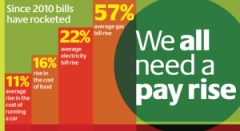
Rich ListNo-one wants to strike, least of all the strikers who lose wages they can ill afford, but what do you do when public sector workers’ pay has been cut in real terms by 8% in the last 6 years and the employers flatly refuse to offer a very modest pay rise to at least try to keep up with inflation? Why should public sector workers bear the brunt of the crash they did not cause and continue to bear it till 2018 when the ultra-rich, who caused the crash in the first place, get off scot-free?

Why doesn’t Cameron answer these questions instead of denouncing strikes on all occasions, regardless of the circumstances or who bears the responsibility for provoking them? The truth is that the government itself has provoked this strike by cutting the funding of public sector employers by 40%, thus making it almost impossible for the latter to pay up, but then rounding on the workers who they knew were bound to rebel and then threatening to bring in rules which would all but make all strikes illegal. Continue reading →

What today’s strikes are all about

Strike for Fair PayWhile David Cameron bleets about the alleged lack of a mandate for today’s strike, it should be remembered that the turnout in strike ballots would be a lot higher if the current legal requirements were sensibly adapted to allow, for example, workplace balloting, plus internet and phone voting. In any event GMB members voted 3:1 in favour of industrial action in response to the local government employers derisory pay offer of 1%, which is a convincing mandate for industrial action, and my experience as a GMB branch secretary is that in schools particularly there is a strong appetite for action and school support staff have been joining GMB specifically in order to take part. Continue reading →

July 10 strike: Government picks fight with public sector workers

pay_campaign_landing_pageThis Thursday, one and a half million workers including firefighters, teachers, civil servants and local government staff will exercise their democratic right to strike. On the surface the dispute is over pay and pensions but the strike is being billed as a wider protest against cuts to public services and the detriment caused to service users.

In a separate dispute over ‘pay for performance,’ transport workers at Transport for London have timed their strike action to coincide with public sector workers. The well-rehearsed arguments about the need for pay restraint to save jobs are already in full swing. They never really stopped following the last big public sector strike in 2011. Rather than the unions picking a fight with the government, it is the government picking a fight with the unions. Continue reading →

Publicly owned railways, not just right but popular

44-takingtrain-gt(1)As the National Policy Forum in Milton Keynes draws nearer, all eyes are on Labour’s policy formation process. Left Futures has discussed bringing back rail into public ownership before. But it is worth returning to the subject because it illustrates everything that is wrong about the way that our party currently makes policy.

We know that renationalising the railways is popular. Polling by YouGov consistently show that two in three voters support it. I know it’s popular because it happens to be the only subject that I have ever been commissioned to write about by the Sunday Express! It was during the 2010 leadership campaign, they knew that I was the only leadership candidate who supported it and they approached me for an article explaining that they knew it was something their readers were keen on. The fact that we now have the highest train fares in Western Europe has further helped to harden attitudes against the current arrangements. Continue reading →